Story 20 · 1755Historical studies

The books that disappeared

Thousands of copies of the 1691 auto-da-fé chronicle were printed. By 1755 none could be found: the descendants of the condemned had bought them up and destroyed them.

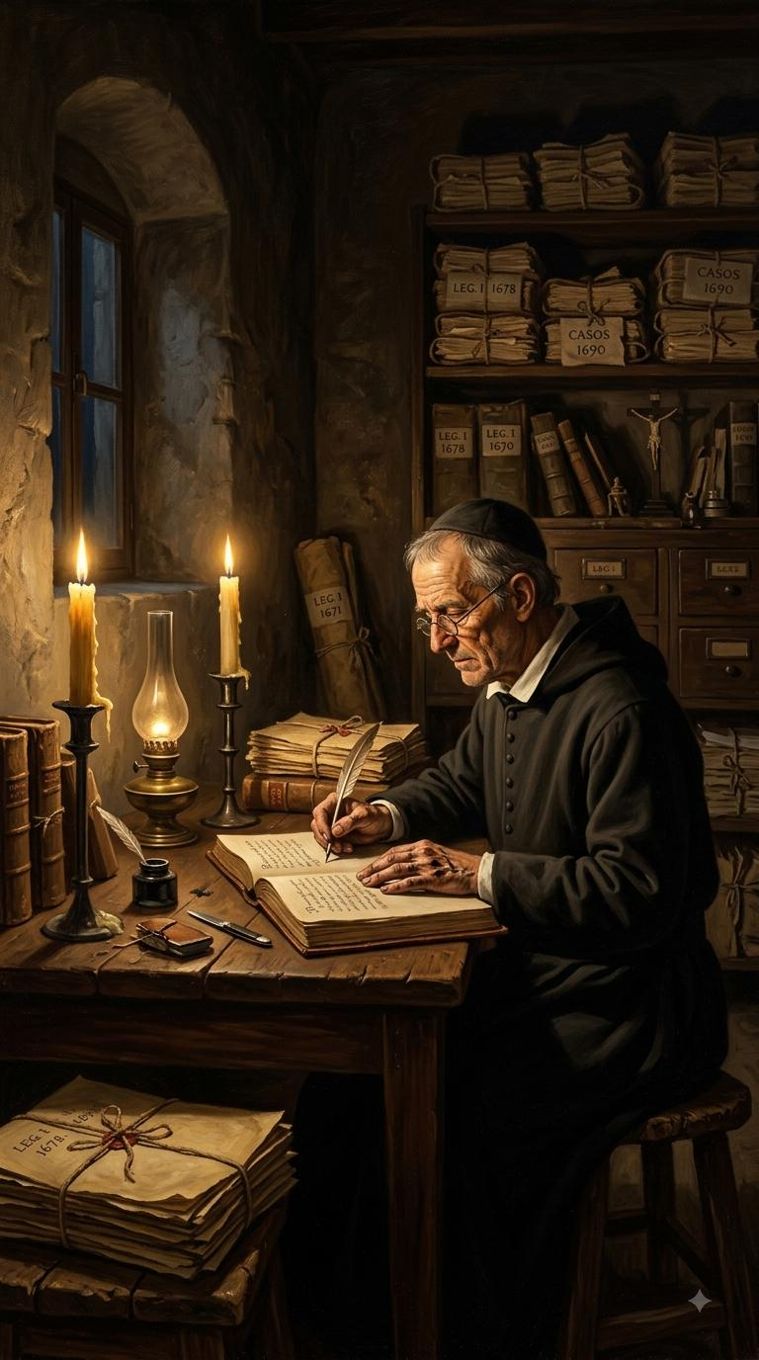
An old man writing by candlelight among bundles of papers
Imagined illustration based on the sources. Not a real portrait.

La fee triunfante, the Jesuit Francisco Garau's chronicle of the 1691 autos-da-fé, was printed by order of the city. Thousands of copies, listing the name, surname, age and trade of every person condemned.

In 1755 Matías Fortuny, a Palma bookseller, asked permission to reprint it. According to Inquisition records, not a single copy of the first edition could be found. The explanation given was that the descendants of those punished had bought them up, one by one, to make them disappear.

The reprint came out that same year. It was a book full of names: putting it back into circulation meant pointing at the same families again, sixty-four years later.

Few images capture the following centuries better: some people trying to erase a list, and others determined that it should never be forgotten.
SourceHoly Office report of 1788 on the 1755 reprint, cited in published studies on the Chuetas.

One story every week,
in your inbox.

More stories

22Archive · AHN
1680s

«The master wanted it»

While the pig was being slaughtered at her home, Ana Cortés leaned toward a relative and whispered that «the master wanted it, and one had to be patient».

23Archive · AHN
1680s

Friday's kitchen

Francisca Martí was cooking on Friday night. Asked when it was for, she answered: for Saturday, «so as not to eat anything cooked» that day.