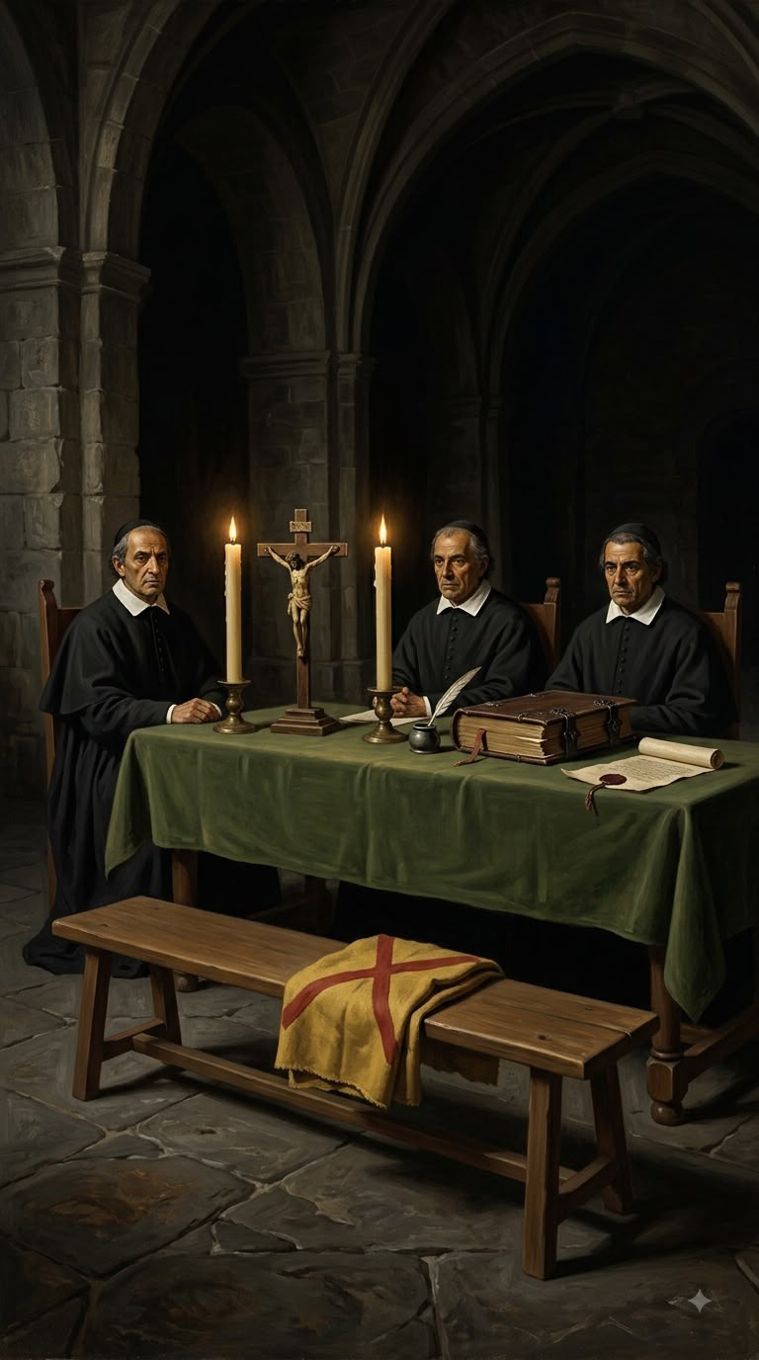
After the autos-da-fé, the sambenitos of the condemned, each with a name and surname, were hung in Palma's Dominican convent of Santo Domingo. It was not a museum: it was a permanent warning.
They hung there, in public view, until the middle of the 19th century.
According to tradition, some families who also appeared on those lists paid to have their names removed. The ones left hanging were the fifteen: Aguiló, Bonnín, Cortès, Forteza, Fuster, Martí, Miró, Picó, Pinya, Pomar, Segura, Tarongí, Valentí, Valleriola and Valls.
That is how a trial in 1691 became a hereditary mark. Two hundred years later, those surnames still decided whom you could marry, which guild you could join and whether you could become a priest in Majorca.
Today those same surnames are a clue for anyone looking for where they come from.