Story 38 · 1678–1679Archive · AHN

The prison as a synagogue

In 1679, while awaiting reconciliation, Chueta women held by the Majorcan Inquisition met in prison and declared themselves believers in the Law of Moses. Years later, that condemned them.

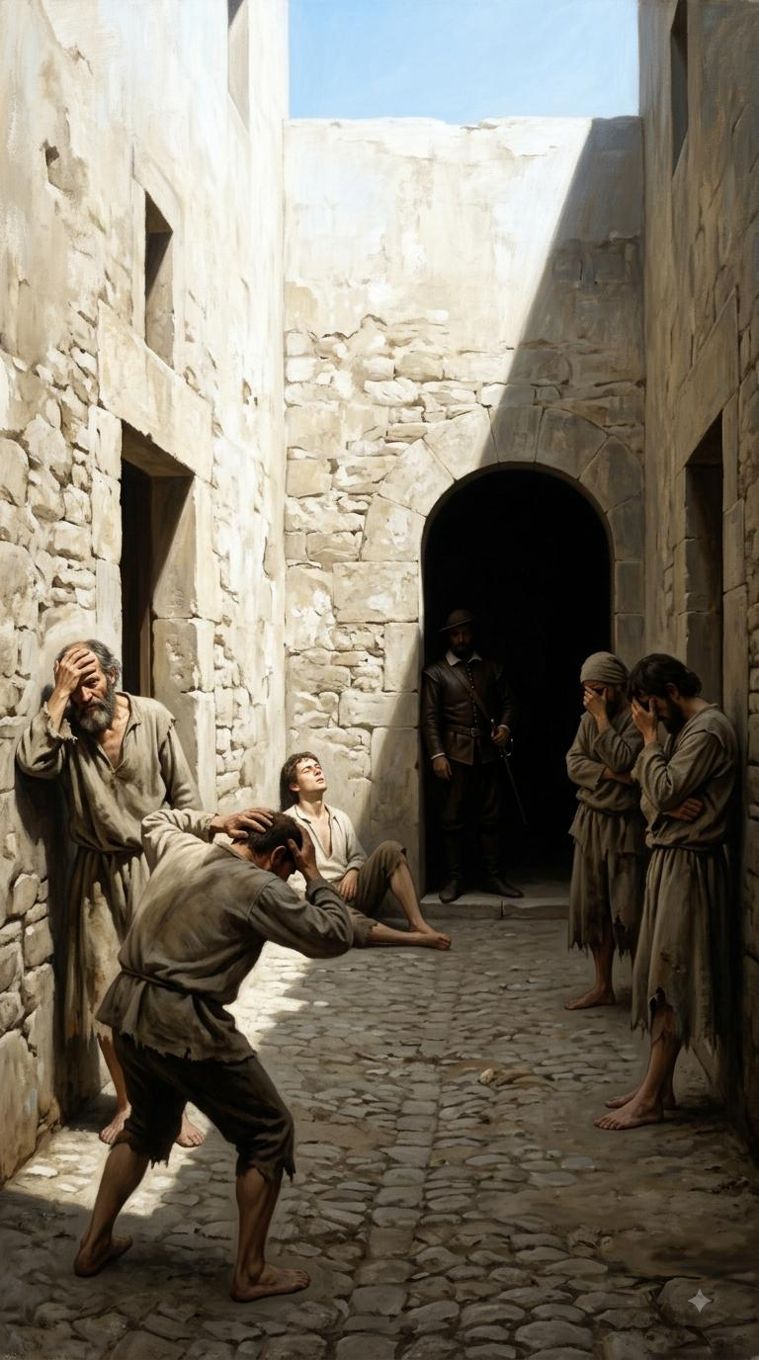
Exhausted prisoners in a stone courtyard
Imagined illustration based on the sources. Not a real portrait.

In the first wave, in 1678 and 1679, the women confessed, begged for mercy and waited to be reconciled. While they waited, something happened that the tribunal would discover later.

They were held «in three rooms and a large hall», with the doors open. And there, one file says, they «again spoke to one another several times as observers of the said law», praising it and saying it was «better and safer». Another testimony says they gathered and declared themselves believers «for a long time, until they were reconciled».

The community rewove itself inside the prison, in the very months when it was performing its conversion.

Ten years later, that was the charge. Isabel Bonnín, Rafael Valls's wife, was accused of having «simulated and feigned» her 1679 penance, done «with the intent of deceiving the Tribunal, for fear of punishment», while keeping in her heart the Law of Moses, «in which they wished to live and die». That made her a relapsed heretic. And in the Majorca of 1691, a relapsed heretic could end up at the stake.

«…bolvieron a comunicarse diferentes vezes como observantes de dicha ley…»Original manuscript, in 17th-century Spanish spelling
SourceArchivo Histórico Nacional, Inquisition, bundle 1707, file 15, PARES image 391; bundle 1713, file 1, images 400 and 540.

One story every week,
in your inbox.

More stories

40Archive · AHN
17th century

Fasting for the dead

When her mother, Catalina Valls, died, a fast was kept for her according to the Law of Moses. And her daughter Úrsula, unmarried, began keeping that Law from then on.

42Archive · AHN
17th century

A defense in the dark

The lawyer wrote it plainly: since his client did not know who the witnesses were, he could not point out their flaws. All that was left was to trust the judge's «merciful integrity».