«We, the Apostolic Inquisitors against heretical depravity and apostasy… command you…» So begins the order to arrest Quiteria Martí, widow of Bernardo Aguiló. It is printed. The blanks were filled in by hand: the name of the chief constable, Gaspar de Puigdorfila; the street, the Bossería; the prisoner's name.
There were so many arrests that they were processed on a form, like a receipt.
The same form explains who paid for the prison. If the seized property included cash, the constable was to bring eight ducats for the prisoner's «expenses and food». If there was none, he was to auction off her «least harmful» belongings until he had raised it. The victim paid for her own imprisonment.
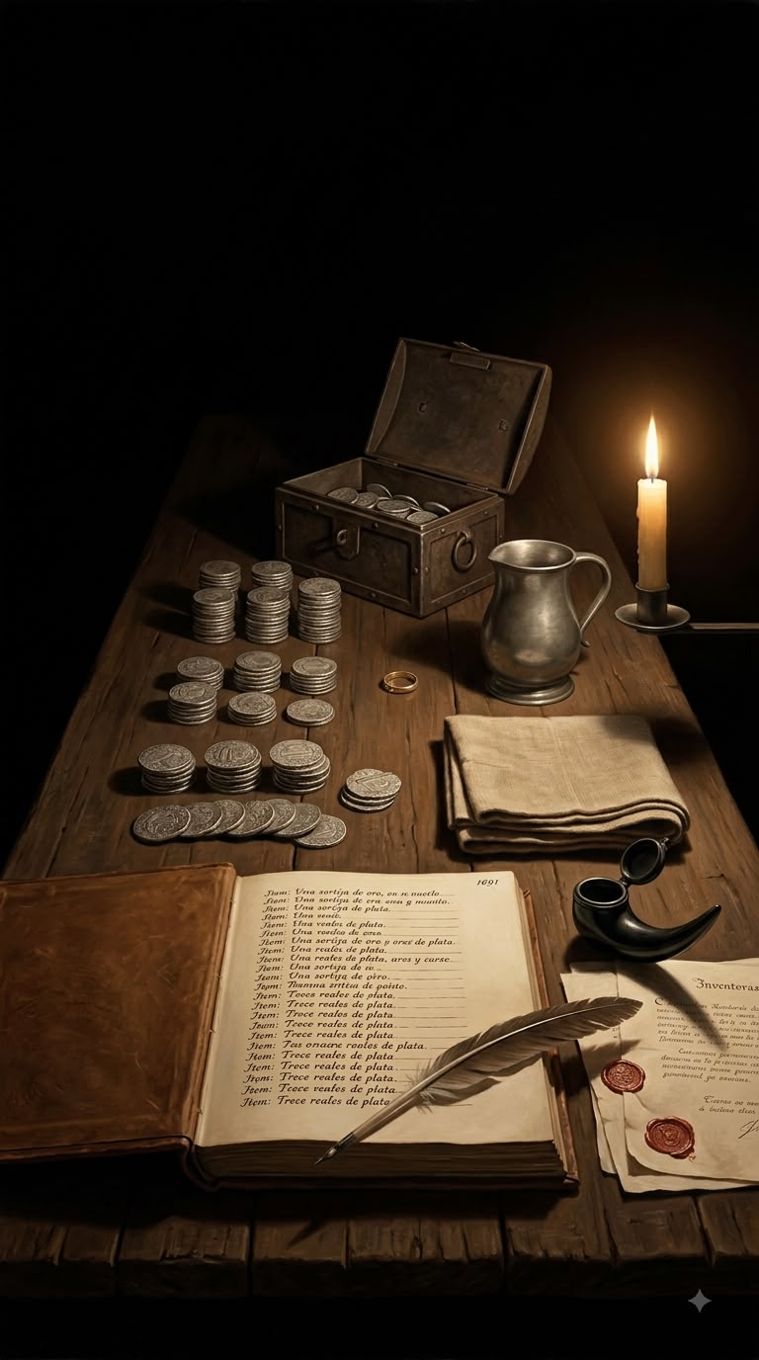
And everything was recorded. On 2 October 1689, inquisitors Hualte and Guerrero granted another prisoner, Isabel Martí, two sous a day for food for as long as her trial lasted. In the margin, the clerk wrote a single word: «Food».
The machine that decided whether a person would live or die kept careful accounts of her bread.