Every defendant took an oath before answering the charges. It was a formality: one swore by God, on a cross.
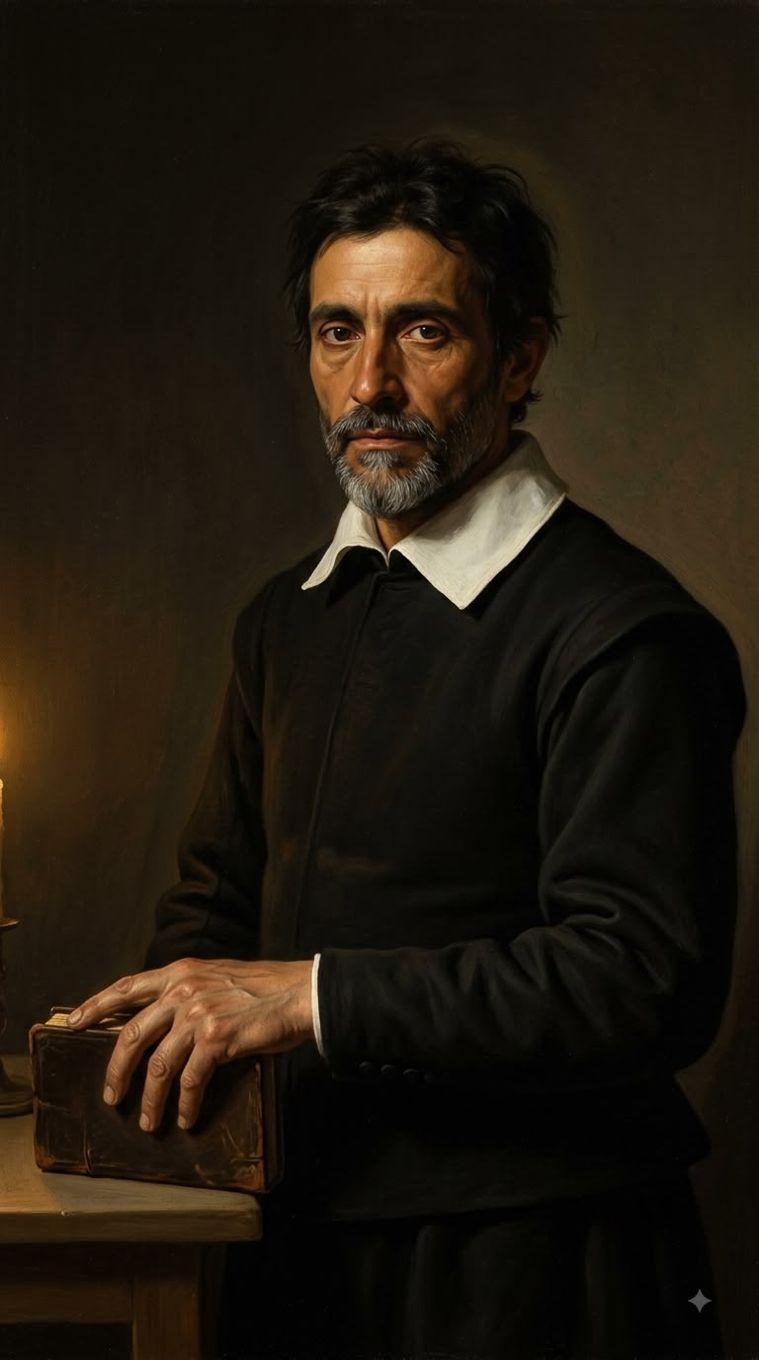
On 9 August 1688, at the hearing where the charges were read to him, Rafael Valls refused. The clerk recorded it precisely: he answered «having sworn by the God of Israel and the Law of Moses (not wishing to swear by God and a Cross)». In front of the inquisitors, plainly, he said who he was.
Valls was the man the Sagell Street community turned to in matters of faith, the one who had arranged the ship for the March escape. His wife, Isabel Bonnín, and their three sons were tried with him. The sons were reconciled at the first auto-da-fé of 1691; the eldest, Rafael Joaquín, wore a rope around his neck and was sentenced to two hundred lashes and seven years in the galleys.
On 6 May 1691 Rafael Valls was one of three who refused to recant to the very end. He was burned alive. The Jesuit chronicler Francisco Garau, who wrote to celebrate those autos-da-fé, describes him as a stubborn man who resisted every argument the theologians put to him. Read today, it is the portrait of someone who would not give in.