The first auto-da-fé of 1691 was held on 7 March in the church of the Dominican convent of Santo Domingo, in Palma. The Jesuit Francisco Garau describes it in detail.
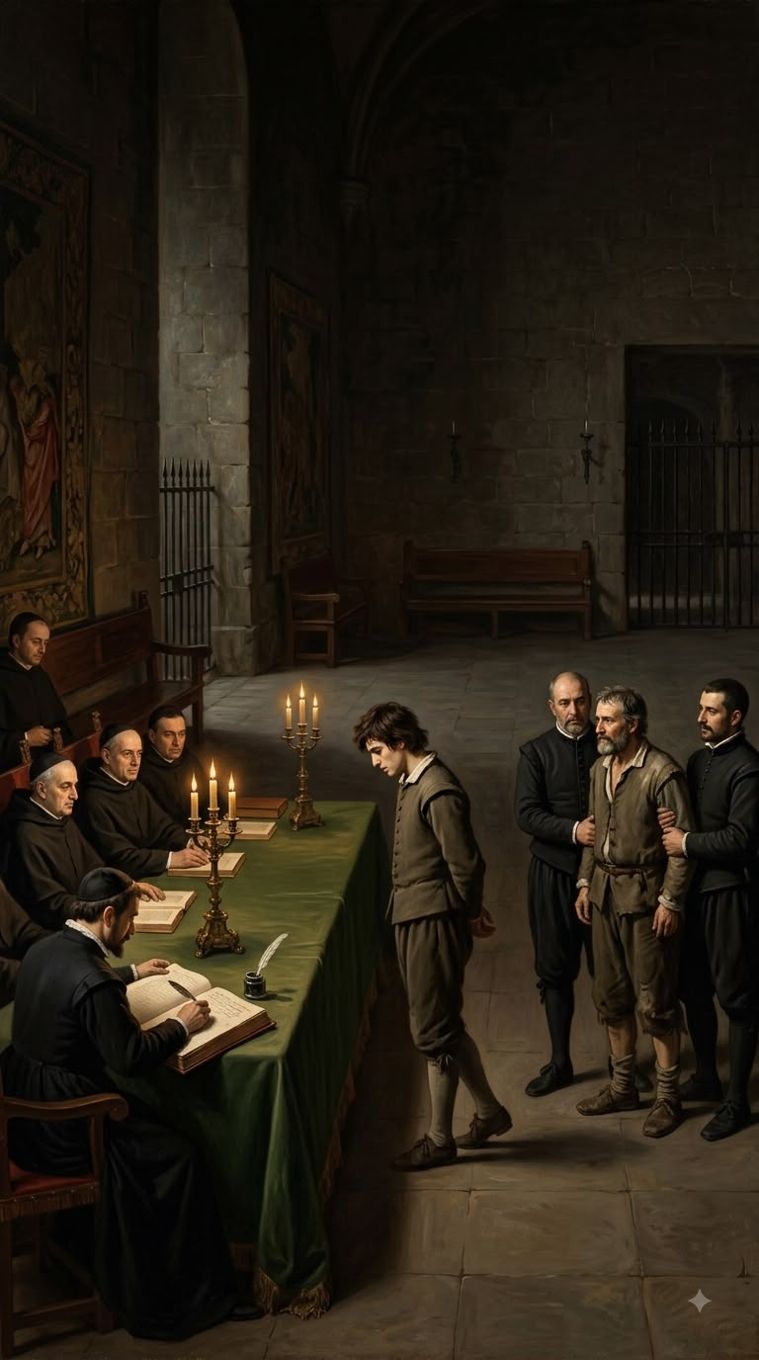
Facing the altar stood a stage of nine steps under a crimson canopy, for the inquisitors. Opposite, eight tiers of benches for the accused. Between them ran a railed corridor known as the «alley of bitterness». At its end hung a cage. Each prisoner climbed into it to hear his or her sentence read aloud, in full view of the whole church.
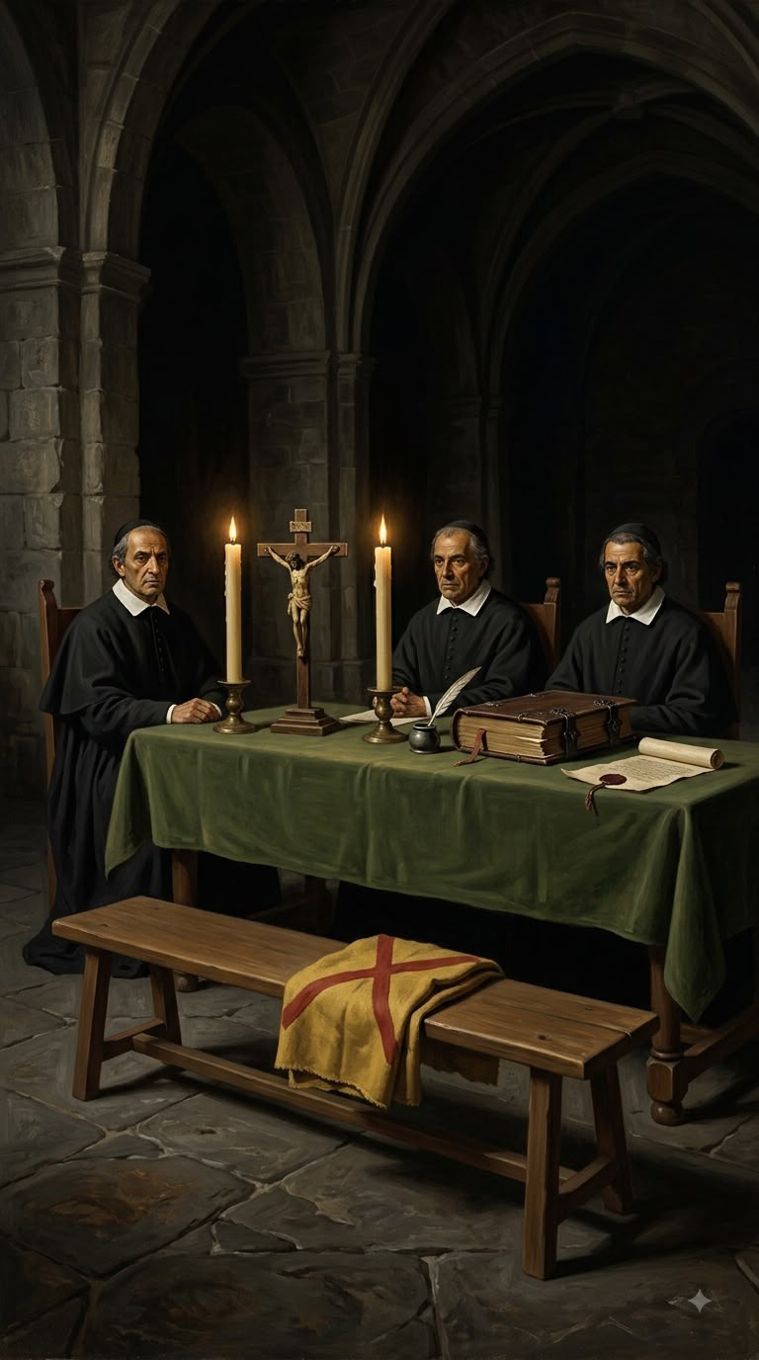
The prisoners wore the sambenito, the penitential tunic marked with a double cross, and held a green candle. Some wore the coroza, a tall paper hat, and some were gagged. Sentences ranged from prison and the penitent's habit to lashes, the galleys and the confiscation of everything they owned.
Among them were the three sons of Rafael Valls and Isabel Bonnín: Rafael Joaquín, 28, Francisco, 24, and Miguel, 21. All three were reconciled. The eldest was led out with a hemp rope around his neck: two hundred lashes and seven years in the galleys.
When the auto-da-fé ended, those sentenced to flogging were paraded through the streets on donkeys, backs bare and paper hats on their heads.